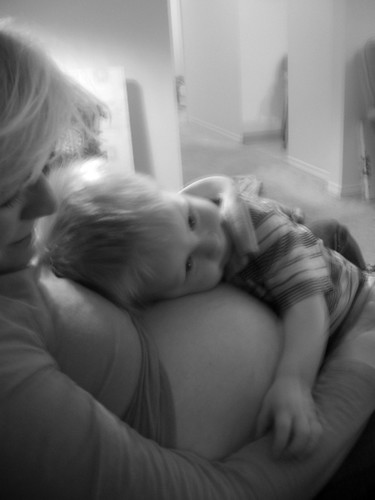
So we've been in the Portland area now for about three months and I thought I would corral some of the impressions I've made of the Rose city so far. Here goes:
1. True to all assumptions and stereotypes, people really do drink a ridiculous amount of coffee in the Northwest--enough to justify Starbucks on three out of four corners of an intersection and at least two other locally owned coffee shops within sight. And just in case one of these is not convenient for you, there are cafes inside the first automatic doors of nearly every book store, grocery store and Target-esque store (they call them Fred Myers here) you walk into. So you can get good coffee (not just the gas station drizzle you picture-even quick shops have real espresso machines) pretty much wherever you go.
2. Speaking of Fred Myers, a store that overwhelms and confuses me, I hate it. I feel small when I walk in laning on my cart, like someone should give me four and a half hours, a pocket directory of the store, a price scan gun, a thorough explanation of the reasons for placing the beer section of the groceries right up against the tableware, which is next to the storage solutions (large plastic bins) in order for me to even begin to successfully find the things on my list. I will drive the one exta mile to the lovely familiar organization of Target. Ah the joyous convenience of the suburbs!
3. No matter where you are, local news is local news. Even in progressive, vibrant Portland, they will cover the wild deer adoption controversy, the most recent storm and the mayor's comments on the weather with equal hyperbolic enthusiasm.
4, It really does rain pretty much all the time here. I mean I knew it was rainy here and had heard all the statistics about depression and overcast weather in the Northwest but you really don't realize how true it is until mid October hits and you have completely forgotten what the sun feels like coming through a warm window and you have fully abandoned all attractive footwear for galoshes that it really does rain a lot, like pretty much all the time. It's not even noteworthy anymore. And I'm sure locals would be amazed it even took me this long to realize this quite obvious fact. I think I was holding out that we were having a rough year or something. Alas!
5. Highway 217 in Beaverton and Tigard was spawned from the same matter that really evil and annoying things were like smoke alarms with low batteries chirping in the middle of the night. Every time I have found reason to traverse 217, traffic immediately gridlocks, the heavens open in a fresh downpour and three BMW SUV's cut me off in the span of ten minutes. I may not have lived here long, but I have a deep seeded aversion to this highway. Ditto for the ramp traffic lights. V. Annoying.
6. If you have the money and the willingness to pop in and out of the rain , there is really miraculous shopping opportunities in the Portland area. We have indoor malls and outdoor malls (seems strange marketing campaign considering #4 above) quaint little neighborhoods with collections of boutiques and restaurants on all sides of the city and it seems to me like there are as many locally owned shops as chains. very refreshing coming from the midwest chain-land.
7. Despite the shopping loveliness, I thought there would be more thrift stores. I mean considering Portland's reputation for environmentally friendly, progressively hip attitudes, you'd figure there'd be a thrift store for every rainbow bumper sticker. But so far, I have not been impressed. Granted, Goodwill seems to be as prolific here as anywhere but the few true gems, the local thrift and second hand stores I have come across seem to be well aware of the value of their matching retro velvet lounge chairs, so fork over your $700 per chair thank you very much.
8. If bike and ski racks on land rovers and subarus are any indication, people really are more active here than in other parts of the country. Despite the rain, if I had a nickel for every spandex bicyclist who peddles up next to me in downtown traffic, my college loans would be paid off. And if Portland is any indication of how the rest of the country is going, we should be investing in Subaru.
9. Powell's really is pretty much the greatest place on earth. Assuming you don't have any outside obligations to pull you elsewhere, you could easily spend the better part of a month wandering the aisles of its colored rooms and periodically stopping off at the coffee shop on the ground floor. Its only downfall might be in this ability to overwhelm--it would be the perfect place to go if you had a ridiculously long layover in Portland and didn't know anyone.
10. Having hills surrounding a city make it really beautiful and somehow more mysterious. Most midwest cities lack this topographical benefit and I think really suffer the loss of aesthetic appeal. Portland feels at once like a bustling stop on major waterway and then also like a lovely little village you discovered through a magic tunnel or stumbled across atop a snowy mountain pass. The frequent morning fog makes the gradations in elevation even more beautiful and enchanting, as if you could weave your way up a hidden drive and find a magnificent castle or a magical cottage. The smaller hills and the larger mountain peaks in and around Portland make the city feel more like a discovery and like it belongs there. You don't get to see the skyline cropping out of the landscape from 100 miles down the freeway, it seems like you find it, or it lets you find it.
I am a winter hued girl. You may not know this about me. The combination of my light blonde hair, blue eyes and pink toned skin makes me look best in cool colors like ice pink and all blue tones and white, but not so good in colors like yellow, cream, bubblegum pink and other warm toned colors. I’ve known this for some time and I’m sure to some extent, it was some marketing campaign that taught me this to get me to throw out half of my wardrobe and buy new cool colored clothes. But I think it holds true. Often the shade of a pink shirt, as much as the style or the fabric, will either complement my skin tone and the blue of my eyes or clash with my natural tones. By genealogical odds, Finn is similarly colored and by some odd departure from his Mexican roots, James also has cool toned skin and eyes. We are a pale, blue eyed family.
This weekend, we painted the one room in our house, our bedroom that had not yet been painted at least once since we moved into our house 2 years ago. I painted it a darker blue-ish, grey-ish teal inspired by a t-shirt that my sister Meg gave James in a similar color. I really like it. I mean, this does not often happen. I usually buy paint by impulse and decide on a color that vaguely matches some color in my head that I saw in a magazine once and often looks not at all like how I imagined it would look. This is not always a bad thing. Our living room and Finn’s room ended up looking really great even though they came out far from the rooms of my imagining. Our kitchen, on the other hand is on its third paint color and I still hate it. This could have something to do with the fact that I generally hate our kitchen, the linoleum, the tendency towards grime and the mismatched cabinets. But all this is to say that I painted a blue room because it was a color I really loved on James and then as I looked around our house last night and saw the aqua of the front room, the various greens of the kitchen, Finn’s room and the library and the mud color of the entry and the dining room, (more of a grayish brown than a chocolate) I realized that our entire house is cool colored, painted in tones that would look good on us in a shirt. Maybe this is some subconscious desire to frame us all in a complementary light or maybe I have so trained myself to be drawn to cool colors in clothing, that I am now drawn to the same colors in paint. But either way, I have a very aqua and green house. I’m sure that in not so many years, these colors will be the mustard yellow and pea green of my parents generation, disgusting, overdone and out of style. I will have to move on to a new cool color; I am a winter after all. But I will be sad to see Aqua go.
I feel guilt come over me when I realize that I have been looking at a non-work related e-mail for ten minutes now and probably missed things that I should have been doing to do my job. And then I flip over to my work e-mail and there are no new messages and I flip over to my calendar and our database and there is still nothing new to do. And so I bring up my gmail again and read another paragraph of a beautiful essay written by a friend who is trying to get a job where she can help people discern their spiritual and occupational direction. I wish that I was doing something so connected and important. But then I feel guilty again and try to find something work related to do and I sigh for what I am wasting and what I am wanting and for all the things that eight hours a day could accomplish.
Yesterday, Finn passed a big milestone, the first Birthday. Unless he has uncanny memory skills, he will not remember a thing about it. He won’t remember me lifting him out of his crib in the morning and doing a jig around his room singing “happy, happy happy birthday to you to you to you-oo-oo” like the way the waiters sing at Mexican restaurants. And he will probably not remember James driving him up to Panera bread, as they do every Thursday to hand him over to my mom for the day and where this day in particular she will tell everyone she sees that her grandson is one today and allow them the joy of celebrating with her by giving Finny something for free--a cookie as big as his head, an ice cream. He will not remember how his new habit of pointing to everything but especially things in the air or on the ceiling will obligingly seem like he is showing how old he is now, how many years he has been here-how cute we will think that is. And he will certainly not remember how my dad, his grandpa held him on his lap at the Cheesecake Factory last night and laughed till his face turned red and he had to cough for the effort of it while Finny slapped at the lit candle and then the whip cream and then the mound of ice cream in the sundae that the kind waitress had brought him as yet another free treat to celebrate; how he smooshed the sundae in the direction of his mouth and then repeatedly turned towards dad to see what was so funny and reach up with whip creamed hands to touch his mustache and his nose. I’m sure he will not remember how in the car on the way home, while he shrieked in his car seat approaching a full blown break down, James and I discussed how to best handle small children in restaurants. And at the end of the day yesterday, I stripped Finn down to his onesie, changed his diaper, cranked the dial on the stone angel that played music and swung him into his crib on his belly. He watched me put things away in his room and then let his head fall down on his sheet where he couldn’t see me below the bumper and he was asleep shortly after. He won’t remember it but I will, the whole day. And I guess that’s the point. We make a big deal every year on at least this one day. And though eventually he will start to understand and demand presents and parties, yesterday was really more about us, about making my mom proud and my dad laugh, making James and me grateful and remembering how one year ago last night, Finny came out of me into the world and changed everything.
On the west coast, the realization that came with the terrorist attacks on September 11th, that our lives were changed, that our world was at risk, that “the American way of life was being threatened” came in a very different tone than it did for other coasts, for other places. I was a sophomore in college, avoiding an early morning aerobics class, laying in bed groggily, when a thin, large eyed friend who lived in the room across the hall burst in our room and said her mom just called from Massachusetts, planes were crashing all over the country and hundreds of people were dying. It was a dream. I’m sure that has been said before, in those exact terms, a dream. But as I pulled on a pair of maroon sweat pants with felt numbers on the left hip, as if I was athletic and shouldered a grey hooded sweatshirt over my head, aware that the colors complemented and that I looked attractively rumpled, aware at that point that it mattered what I looked like when flip flopping into the dorm lounge to watch the TV bolted to the upper corner of the wall, I was dreaming. I was not awake yet. I shuffled into the lounge and watched the news cast, the pictures at 7am in the morning as others had already been at work for hours and then been scorched to death or thrown themselves out of burning windows 57 stories off the ground. It was a dream. I was groggy still and then I woke up gradually to the choked up accounts of journalists, the ashen faces of onlookers, the shrieking drone of sirens. I remember being amazed that everything continued to work, that the shower still turned on and the cafeteria ladies still came to work and the microwave hummed with my hot chocolate water. I was amazed that everything didn’t just take a few days off to be very sad. We spent the day in the dorm room lounge on the pristine Montecito campus of a small private college where the lack of parking passes was the biggest problem we faced, in a town full of movie stars in flip flops in a state where Arnold just won in a country full of those that remembered another time of crisis and a generation that had never had crisis before. I peered at this trauma through a small television screen, shoulder to shoulder with the educationally and financially elite, the millennial generation who had not seen civil rights or Vietnam, or the atom bomb but through an even more distant film strip in history classes or in the distant voices of our grandparents. This was very new to us.
A year later, I was studying abroad in England with lovely intelligent people from that same pristine college and our two professors and their spouses led us through the cities of the UK and settled us in to a month long stint of intensive study at an enormous old manor house run by nuns called Hengrave Hall. The nearest town was called Bury St. Edmonds and to reach it, one must amble down a picturesque lane through the grand entrance gate of Hengrave, along a street lined with thatched houses and cottage gardens to a very regular and modern looking bus shelter where you caught a very regular and modern looking bus and wound through the roads that were made before maps, before cars and before modern looking anything to the city center bus stop. It was on a day that I had come into town to escape the literary intensity of my comrades to walk through the local market, that I stopped for a coffee and a sandwich in a very british looking café. I sat at a small table near the window, aware as I always was when away from my group, of my American voice ordering the meal and my very American hair and shoes. I had brought a book of poetry, partly to feel productive while escaping and partly because I knew that I would stop and eat alone and eating alone with a book in hand is far less pathetic. As the waiter brought my plate and I pushed my cup of coffee further towards the center of the table to make room, I was aware of sympathetic looks. I thought back to the bus ride and the walk through the market and realized that I had received many of these looks throughout the day, from the chemist at the drug store when I asked where to find a certain kind of chapstick, from the vendor at the market who had sold me a scarf I planned to give my sister for Christmas. They heard my voice and cringed a little and smiled. I sat eating my sandwich carefully, thinking how strange those looks had been. And then the manager of the little café came out from the kitchen and said in a slightly raised voice as he looked around the room, “In respect for the lives lost and the terrible tragedy that took place in America exactly one year ago, I would ask your silence for a minute now to remember.” The café hushed and many people looked towards my table near the window. A woman near the swinging door to the kitchen bowed her head and some businessmen looked towards the large clock above the bar, their faces furrowed and concerned. The sympathy in the room was palpable. I felt a thick knot rise in my throat and nearly sobbed for the sadness of it all. I knew that I was being watched and so did not sob, or even cry a little; I knew, especially as a lover of literature that that would have been too much, too dramatic. But I loved England so much in that moment. The thoroughness of the emotion was full in me in Bury St. Edmonds, a small British town outside of London.
I just thought of a smell that I hadn’t thought about in a long time. Winter sweat. I was thinking about how I wanted to start exercising and that I would ride my bike to work, all one mile of it and how I would maybe smell or be sweaty when I got to work and how my dad used to run miles and miles every day on his lunch break and then shower and be back to his day, refreshed, exercised, like a horse. When he ran during the winter, he wore wind pants and a long sleeved t-shirt, some shwag from the last marathon he had run, a knit hat of nuetral color (but not cool nuetral like khaki or chocolate, usually just grey or navy) and those small one-size fits all gloves that stretch over your fingers and reach just to the veins of your inner wrist. Running was the only time I saw my dad where a hat. He was and is a very functional man with a thick head of wavy hair that in the seventies grew long and very Michael Landon-ish but in my child hood was cut short, not buzed but short so that he had a perfect rippling helmet when he brushed his hair back after taking a shower. Baseball hats or flat top old man hats or winter caps for their fashionable or bald spot covering function had no practical purpose for him so the only time he wore a hat was to cover his ears while running in the winter. Saying that he ran in the winter implies a certain commitment to his craft, we lived for nine years in upstate new york where every winter we had snow drifts so tall that we dug forts out of the side of them, not rolled up into a pile, dug out of from the sidewalk or the road with intricate rooms. Granted, I was small at the time, but these were large snow banks. Large like you couldn’t see our Winnebago parked in the drive way from the side, snow banks. One winter, we had such a big storm that all the electricity went out and our heat must have been electric because we all had to sleep in the living room in sleeping bags around the fireplace and when we woke up and the TV flashed on, the news was saying that the Challenger had exploded and we were all very sad and cold and snowed in.
We also lived in Minnesota where temperatures are judged by the actual and feels like, both usually in double digit negative numbers. My freshman year of high school, the governor (Jesse Ventura the ex-wrestler mind you, no sissy politician from the city) called off all schools in the state because wind chills were going to reach -65 degrees. My dad ran in the winter in Minnesota too. In fact he trained for the grandma’s marathon in Duluth, the last marathon he would run through the winter, running the mile and a half to the community center and then running about 897 laps on the indoor track and then running the mile and a half home to cool off.
And when he came home, I remember this from the very first memories I have, he smelled like winter sweat, a different, more pungeant version of sweat that hung in the air around him like the cold air itself, thawing in the indoors and becoming more potent. He grew a beard every winter and the condensation of his breath would freeze into icicles on his beard making him seem like he had come in from another world, very supernatural and Narnia like.
I wonder often why this running thing, I guess you would call it a passion or a talent, didn’t run in the family, no pun intended. I have never had the inclination for nor the ability to run. I realize that running long distance takes conditioning and training. But it just would not take. I tried. When we first moved to Minnesota the summer before my freshman year of high school and I started to go by Kate instead of Katie and went on the first diet of my life (something having to do with grapefruit and bacon) to have a fresh start and be the funniest, most stunning person anyone had ever met, I started to run. I ran on the beautiful trails surrounding our apartment complex, past a lake and a few churches, through lovely peaceful woods and serene backyards…and my lungs nearly seared themselves through my chest when I finally stopped and panted and clutched my right arm as if anticipating a heart attack. I had run a half a mile. I started again the next day and would try all manner of distractions from singing favorite songs (obviously in silence, I couldn’t pant frantically and sing at the same time) to replaying particualrly vexing moments in my recent life and figuring out the best, most witty and cutting thing to say to achieve my goals. Nothing worked and I gave up quickly. I started high school with an awkward hair cut that was ment to look like Meg Ryan in IQ and the same extra pudge that had hung with me since childhood. Running was not my game.
I think perhaps that my dad has always run as a process of renewing, of coming back to something paced and kinetic. He had run track as a kid, in fact it was coming home from a track meet that he had walked into his kitchen and heard that his father had had a massive heart attack and was dead. My dad had been running when his dad dropped dead. There must be something to that. He had placed in two events that day. Maybe he returns to running every time to get back to before the sky came down, before his mom taught sewing classes in their basement to keep food on the table and they saw less of his dad’s raucous family and had a lot less fun. Maybe running has always been something that he has been good at. He won two ribbons that day and no matter what happened later in life, he could beat his mile pace; he could find a new trail and clock it with the car and run it in a loop. I ran to accomplish, to be thinner or be able to eat more. I think my dad thought these things too. I mean his dad died of a heart attack at 43, a short life of whole milk and not enough exercise. So he ran to be healthy but he also ran to pound out stress or process through things. He was happier when he ran regularly.
I thought all of this in some form tonight while I was rinsing the shampoo out of my hair, how maybe I should write it down, the memory of winter sweat and how the writing it will make it more permanent, a history instead of a flashing rememberance that I will not remember tomorrow but that will leave a bit of a pang because I knew it was a good thing that I had remembered. So I write it down, for what it will accomplish but also for the process of remembering and I am happier for articulating it, for pounding it out on the keys. Writing it makes me put the thought into a sequence and make sense of it. And I know that my writing, whether I make anything of it or not, is like my dad’s running. We return to something we know to put reason back and find the peace in the pavement or the clarity of the document.
Finn has been alive now for almost six months and obviously, so much has changed. So much though that I am already forgetting things about the beginning and wishing that I had followed through with the journal idea and logged this process more thoroughly. At the time though, I thought I would never forget what time he was born and what I thought when I first glimpsed him or the way James slept all folded up on the cot in the recovery room and kept whining about the TV volume being so loud and inexplicably impossible to adjust.
Six months has passed and those memories seem far away. A friend from work just had her baby girl on wednesday and I realized as I heard the details of the birth how important this information is, how it offers the web to support the story. How the fact that Finn was born on a Wednesday in May is interesting because I went to the Indy 500 the Sunday before I was induced in record breaking heat and nearly fainted in the stands. James soaked a towel in our cooler over and over again and slapped the icey wetness on my neck to keep me cool. How Finn was 8 pounds 11 ounces and most of the weight was in his enormous head that still looks a little bulbous and makes me wonder how he ever came out at all. And how when I first saw him, he was sort of pinkish bluish, greyish--not in a scary he might be dead way but in a wrinkled, I've been in the pool too long way. He looked so much like James in that first instant too. Not the pool color thing, his features. He seemed like he was squinting at me just the way his dad does at the TV without his glasses. He has come to look less and less like James these last months. Or perhaps he has just looked more and more like himself and I don't notice the resemblance so much. But at first, it was uncanny.
I was induced that Wednesday morning, and we arrived a few minutes past 6am. I had showered the night before and curled my hair that morning knowing I would look hideous for pictures and figuring my hair might as well look nice. We waited in the waiting room with a middle eastern family, a chatty patriarch and silent pregnant wife with two little brown eyed girls, about two and four years old. It came out that they had four other children at home and this pregnancy was more risky, the baby was flipped the wrong way. We watched cartoons until our rooms were ready. Apparently it had been a busy night.
Wednesday was the one day my mom said not to go into labor because she had to work and had no one to cover for her. But she called in sick anyway and they had to reschedule all her patients. She wouldn't miss it. And my dad couldn't have missed it. As the putocin started to work and the contractions came on, my mom sat at my right watching the moniter and talking me through the swells, telling me when the number peaked and I would start to feel better, running her fingers over the skin of my arm and looking so concerned. James sat at my left and held my hand loosely, registering no emotion on his face apparently so that I would read relaxation in his body language. It looked like indifferent nonchalance to me at the time but has since been cleared up and the hysterical tears after the birth confirmed the presense of plenty of emotion.
My dad stood at the foot of the bed, his hands in his pockets, his camera at the ready and a ridiculous grin on his face. He looked from the moniter to me to mom and smiled with what could most accurately be called pride but also, it must be said looked nearly maniacal in its consistency and considering the circumstances, very out of place. I looked between the three of them and most often ended up staring at my dad and flexing my toes against his legs at the end of the bed as the contractions waned. He was directly in front of me, so it was easiest to look at him. But he was also the least charged one in the room. He was just ecstatic to be there and certain that all would end in a gradchild. He was easy to lock eyes with because he was so sure and so happy. He had to leave when I started to push, no one's dad needs to see that. But he didn't want to go. And he paced in the hallway outside the door until the nurses chaced him off to the waiting room. Even then, he made laps around the maternity wing and slowed conspicuously in front of our room each time until one lap, he heard my mom say "he's almost here Katie, one more push." And he stopped and he waited and ducked into the vestibule of the room where none of us could see him and he heard that first little cry after they scooped out the gunk in Finn's throat. And then he went back to tell Heather and when my mom called to give the news, "He's been born!" My dad said, "I know!" She was so mad.
Three years ago today, my two roommates convinced me to grab a New Orleans mask I had hanging on the wall, bring my thirteen year old hoodlum student and make an appearance at a party with many varieties of intoxicated people. I shouldn’t have gone. I am normally a much more responsible and rational person and would worry too much that my charge would tattle on me. But I went. And amidst the revelry and the bizarre costumes and the shirked responsibility, I met a boy who made me laugh. He wore a loud polyester shirt rolled up to his elbows and funky glasses that framed his very blue eyes; he cheated at cards with as much skill as he dealt them; he quipped back at every brilliant comment I could muster; put cocky drunk people in their place and directed my preteen to the video games in another room away from the bad influences; and generally began the process of making me fall in love with him.
On another October night, less than one year later, I married him. And I can’t help but feel very grateful that for one evening I departed from my normal sense of appropriateness and showed up at a Halloween party. And then showed up at a bowling event the next day and a night out for drinks a couple days later. And then talked all night a week after that and washed dishes in my kitchen with the low ceilings and then drove to Solvang and went to Roy and said I love you and then, one night on our way to see Jerry Seinfeld, that same boy who made me laugh had a ring turned in on his pinky finger and on the lawn of the courthouse made famous by Michael Jackson’s conviction, he got down on one knee and asked me to be his. And I said yes and I am and he is at home right now taking care of our little boy.
And it all started on Halloween, three years ago today. James, happy anniversary in a manner of speaking. You showed up and changed my world and I’m so glad you did.
In the moments of frustration, inability and fear, I have found prayer to be a surprising byproduct or I guess, companion. It sounds clichéd to say that my lack of control has induced a dependence on God but that is how it is. I need to defer the control, when I cannot have it, to someone or something that can. This started when labor started, or when the inducing appointment was made. Despite the many tubes and drips and utensils of the hospital, I arrived at labor by natural processes and found myself feeling completely without control, or at the whim of this momentum. Knowing that things could go wrong and nothing that I could do would help or hinder this brought me to a prayerful place unlike anything else has in a very long time.
And since we have come home, when I stand in the dim light of the lanterns above Finn’s crib, my leg cramping from the constant motion of jiggling him to sleep, I have found myself making noises like what the old testament gnashing of teeth must sound like. It is an inarticulate articulation of frustration that is a prayer; not a prayer I have ever prayed before. This is why it is surprising. I knew prayers before bed and call to worship and benediction. I even knew prayers of commitment and salvation and confession. Those prayers had become rote and clichéd and the most condemning of all, “evangelical”. But these prayers in the nursery were new, the circumstances and the language unfamiliar. Not any foreign garbling of the Corinthian tongues, but just an energy directed upward in blank supplication that can be translated most closely as: stop the crying; keep us safe; take away my fear.
We surround him, our home is filled, with protective measures. I lay him on his mattress, which is firm to prevent suffocation, surrounded by the bumper that cushions his head from the hard wood spindles of his crib. And I change his diaper on the contoured foam pad atop the changing table to keep him from rolling off. The bottles are sterilized; the outlets covered; I take vitamins. Yet when I return to bed in the wee hours after feeding him and wrapping him and settling him back into his protected bed, I feel fear come over me. I fear intruders breaking into the house and snatching him; or that he will stop breathing or that something will happen to James-and it paralyzes me. My life is tied to these two men, one grown and one small. I would end if either of them did. And in these moments where this fear comes, I can only whisper or think up this wordless or inarticulate prayer that we would all be protected: From faceless burglars, from car accidents, from bad health, from the very air.
Last week I trekked downtown, pushing the stroller over
All these babies are in the process of growing and being born around me and I can't help but think about my own baby's entry into the world and the inevitable accompaniment of pain to the process. My feelings on pain and the controversy over its alleviation regularly change, but at their extremes camp out in these two attitudes. After hearing about Tonya's near super-human effort at birthing Cosette sans any pain medication whatsoever, it seemed that the pain was a glorious physical journey not only necessary to the process but the priveledge of the new mother to experience the birth so tangibly. I thought about the women in the fields hundreds of years ago birthing their children with little more than grass and friendship to aid them. How beautiful that picture seems.
But then I visited John and Tonya in the hospital and heard Tonya's mom retell the labor story- all about Tonya's strength, the stretches of time, the contractions, the tunnel vision Tonya experienced where she heard only voices and felt completely taken away by the pain. This story is beautiful too, in its way. Because Tonya is (and I've thought this about her from the first) capable and reasonable and strong. I, on the other hand, am not enough of any of these things to deliver my baby without the most that modern medicine has to offer by way of relieving pain. Tonya is Titania-Amazon queen of mythical forrest. I am just me, spoiled and silly and all talk.
James said last night that he is already more proud of me than he thought he could possibly be; that he thinks I have dealt with the discomforts of pregnancy with both stoic strength and quiet grace and that he doesn't compare me to other women; that he doesn't expect a certain level from me. I am glad... and I think I need to think more in this vein. I am not a failure if I get an epidural, I am choosing the experience, which is a freedom the women in the fields didn't have. It is not important enough to me to feel every tear and strain of the labor process. As Carrie put it, "it's still work, it's still labor, it still hurts with pain medication."
And I don't think the drama or the emotion of the experience will be lost on me. If anything, I have a tendency to overdramatize and emotionalize situations. And I think this will be a big one no matter how much of my lower body is numb.
It's very difficult to write about being pregnant without employing the same tired phrases and cliches that so many other women have used before me. But then nothing is said and I will look back on this time and not remember what exactly it was that I thought or worried about. So I will attempt to get at the feeling here, even if it is the same feeling as so many who have gone before me.
I am tired of women-those I know and those I do not- telling me the horror story delivery that they survived despite atrocious odds. I'm not sure if they think this is some badge of courage they feel they have earned and therefore have the right to brag about to any expectant mother they see, but it's frightening to those of us who haven't given birth before, because that could be me. And I don't want to almost die and have emergency anything done to me or the baby. By the sounds of it though, it's inevitable that something horrific happen. Maybe they don't realize the effect this has on us, the expectant mothers, that is. Maybe they don't know that I am an irrational sponge for information and as they recount the shades of blue they and or the baby turned, I file the information away for future use. I don't necessarily think that it will happen to me but I am petrified at the prospect.
I am also very afraid of my part in the chain of dependance created when a child is brought into the world. At this point, I have no career to leave so I will stay home for an indefinite amount of time and James will work. The physical and circumstantial factors of our lives make this both practical and necessary for us. But even though I know I will love this child, I don't think I love him yet. And so it is hard to picture the life of dedication and love I will have in two short months. I hope giving birth is a transformation. I hope I am awash in maternal euphoria that lasts far beyond the delivery room. Because right now I can't picture me happy at home with a small crying person alone.
The financial and emotional dependance I will feel towards James also frightens me. I am too much of a feminist, too much of an extrovert, too easily distracted and changed to feel fulfilled by only one adult person in my life. Aren't I?
I know I make this sound like I am moving to a small deserted island to commit my life to silence and self sacrifice and really there are plenty of people who will interact in my life and challenge and inspire both my emotional and spiritual and mental persons. But sometimes it feels like I am moving very far away from adult conversation and career paths and coffee dates and epiphany to that very solitary and child talking place- stay at home mothering.
I'm sure I'll be fine.
The Starbucks at College and Fall Creek seems to draw an interesting crowd. My visits here have been limited thus far (two times to be exact) so I haven’t exactly made a study of the demographic but each time, I have been surprised. Today for instance, a forty-ish associate pastor looking man with a goatee has just rolled his absent-faced father through the door with various fanangling required to maneuver the unwieldy wheel chair over snow banks and door jambs to stand looking dazed at the seating area full of busy business types and students. He veers over to the overstuffed chairs in the corner where I am obnoxiously talking to my sister on my cell phone and positioned in the very center of the five chairs. He starts and stops a bit vaguely glancing at me by side-ways looks until I finally manage to focus away from Meg’s latest complaint on my mother’s insensitivity to this poor man’s predicament. I say quickly, “would you like to sit here?” He seems relieved that he didn’t have to initiate the request and moves towards the chairs as I jump from the chair and move to another corner. He gratefully gives his thanks and mentions that the corner makes it easier to hear for him—pointing at the aged man in the wheel chair.
Finding an audibly pleasing spot in the coffee shop seems to be one of many challenges on this outing. He pushes the wheel chair up to the arm chair and through such awkward heftings and slidings that I consider offering my help, lifts the older man from one chair to the other. Once positioned, the young man leaves his oblivious companion to fetch drinks. He returns and they say very little. The young man even unfolds a newspaper as he settles into his chair and they sip iced drinks through straws. About ten minutes later, after a mumbled comment by the older man, they reverse the lifting and settling back into the wheel chair and roll back through the seating area to the door and the snow packed parking lot. Relationally, the visit seems unfruitful to my observing eye. But perhaps if the young man is the older man’s son and if the older man’s mind is as absent as his expression, time spent is the most productivity they can expect. This excursion from the nursing home or wherever the older man lives is a consolation for the young man, an activity to enact an earlier relationship, the silence after the last note has sounded before the music ends.
As most young people do, I fear this scene in my future with my parents. Recently, my marathon-running, detail-obsessive dad lost his hearing in his right ear and since has taken on an almost caricature like tendency to cock his head in confusion and say “what?” He jokingly says things like “in my good ear sonny” but he had an MRI done and a CT scan on the hip that has been giving him pain and keeping him from running. I know I am lucky, as these things go. My parents are healthy for the most part; young for parents of people my age, and active. And sanity-wise, well there are other important qualities and none of their lack has come with age. It was always there. But I know I will be sad when I have to pick them up or check them in or pay for them. And I’m sure I will be like the young man who just wheeled his dad back to the car. I will bring them to coffee or dinner or movies like we have always done, whether they know what’s going on or not, for my sake.